Heritage Property Restoration: Mistakes to Avoid
May 30, 2025by Lee ChambersBarn ConversionDesign0
Restoring an older or listed property starts with understanding what makes it significant and how its materials manage movement and moisture. The wrong repair can damage original fabric, conceal the cause of a defect or create a consent problem that is difficult to resolve later.
The following mistakes are common because modern construction products and ordinary renovation methods are not always suitable for traditional buildings.
1. Assuming that repair work never needs consent
Not every old property is listed, and not every repair to a listed building needs Listed Building Consent. The key question is whether the proposed work affects the building’s special architectural or historic interest. Historic England advises owners to check with the local authority’s conservation officer before carrying out work when consent may be required.
Read Historic England’s Listed Building Consent guidance. Planning permission, Listed Building Consent and Building Regulations are different controls, so establish which ones apply to the specific proposal before work starts.
2. Designing before understanding the building
A condition survey, measured information and research into earlier alterations can prevent the design from being based on false assumptions. Identify important fabric, construction methods, existing defects and services. For larger changes, the architect, structural engineer and conservation adviser should work from the same information.
Opening up should be planned rather than treated as uncontrolled stripping-out. Agree what can be removed, what must be protected and how unexpected discoveries will be recorded and reviewed.
3. Replacing sound historic fabric unnecessarily
Wholesale replacement can erase the details that give a property its character. Windows, doors, plaster, brickwork, flint, roof coverings and joinery should be assessed for repair before replacement is assumed.
Historic England’s principles of repair favour retaining significant historic fabric and keeping intervention to the minimum needed. A careful repair specification should describe what is retained, what is renewed and how new work will be distinguished or matched.
4. Using incompatible materials
Traditional walls often behave differently from modern cavity construction. A hard, dense or impermeable repair can restrict drying, concentrate decay in softer brick or stone, and crack away as the building moves.
Lime mortar, plaster, render and breathable finishes may be appropriate in many traditional buildings, but the exact material and mix must suit the existing fabric and exposure. The SPAB guidance on breathability explains why vapour permeability is only part of moisture behaviour and why the whole construction needs to be considered.
5. Treating damp before finding the source
A damp reading or stained wall does not identify a single cause. Defective gutters, high external ground levels, failed drainage, plumbing leaks, condensation, blocked ventilation and impermeable finishes can produce similar symptoms.
Investigate rainwater disposal, ventilation, ground conditions and previous alterations before specifying treatment. Injected products or waterproof coatings should not be automatic responses to moisture in an old building. Correcting the source and allowing suitable drying may be an essential part of the repair.
6. Underestimating structure and temporary support
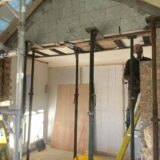
New openings, removed walls, altered roofs and weakened timber all need coordinated design. The structural engineer should understand the existing building and explain assumptions, investigation requirements and temporary support. The contractor must be able to build the sequence safely without damaging adjacent fabric.
For relevant construction work, see our structural alterations service in Norfolk.
7. Letting services dictate the historic fabric
Electrical, plumbing, heating and ventilation routes should be planned early. Chasing walls or cutting timbers after other work is complete can destroy fabric and undo carefully finished areas. Agree routes, access points and visible fittings with the design team before installation.
Energy improvements also need a whole-building approach. Insulation, airtightness, ventilation and moisture movement are connected, especially in solid-wall properties.
8. Choosing a contractor from price alone
Compare relevant experience, the proposed method and the detail of the quotation. A low total may exclude protection, specialist materials, access, surveys, temporary work, making good or the time required for careful repair.
Ask who will supervise the work, how important features will be protected and how discoveries or variations will be approved. Our builder’s quotation guide explains how to compare scope, exclusions and allowances.
9. Ordering specialist materials too late
Matching bricks, tiles, stone, windows, joinery and lime products can require samples, approval and lead time. Identify these items before fixing the construction programme. Store materials correctly and follow suitable seasonal or weather requirements for the work.
10. Failing to record what was done
Keep approved drawings, consent decisions, specifications, photographs, product information, certificates and a record of agreed changes. Good information helps future maintenance and gives later owners a clearer account of the building.
A better approach to heritage work
- Understand the building and the proposed change.
- Obtain the necessary surveys and specialist advice.
- Confirm permissions before work starts.
- Write a repair and construction specification.
- Compare contractors on method, experience and scope.
- Protect significant fabric throughout the work.
- Record decisions, discoveries and completed repairs.
See our listed and traditional building service and completed Norfolk projects for examples of our work.
If you have surveys, drawings or consent information for a heritage project, contact Stellar Construction for an initial discussion or send us the project details for a quotation.
Reviewed September 2026.